56 A. What are the three important areas an officer can look at when in the deployment stance?
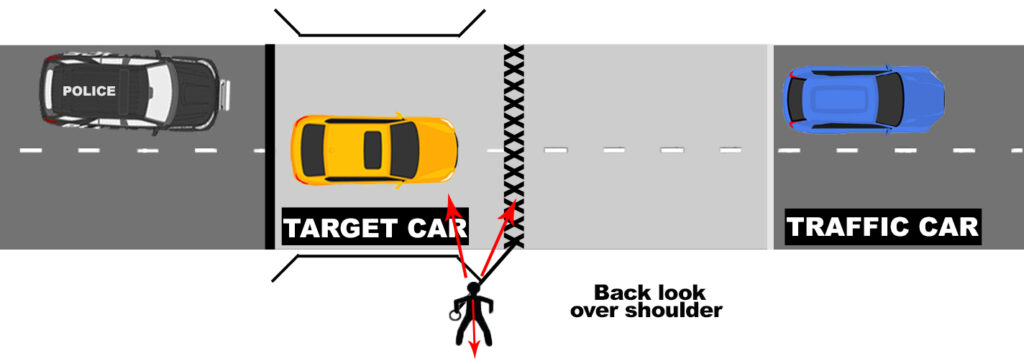
A. Traffic – spike system, escape for cover.
B. Facing traffic, the officer is more likey to early spot the target vehicle.
C. The officer being able to see the spikes can deploy at first chance, position the spikes, recover the spikes.
D. The officer can rotate his head and look behind him and seek best cover if rquired.
E. Being positioned to look around is not important, just deploy the spikes.
56 B. How does the stance improve effectiveness?
A. The deployment officer watches approaching traffic and is more effective at deployment and recovery of the auto spike.
B. The officer can better position the Auto-Spike on the roadway, the stance keeps the officer low and harder to see by the target.
C. The auto-spike slides across the surface, low hard to see, and the cord is low to not snag a bumper, and be pulled down the road.
D. The system can be recovered quickly, because the Stance helps keep slack out of the line, for a quick removal by a quick tug of the system.
E. It doesn’t help.
56 C. When can the Auto Spike system be deployed?
A. When the last car clears.
B. During high-speed chases, pursuits of dangerous suspects, vehicle thefts, and in situations where protecting pedestrian areas is crucial.
C. They are also used in rural and highway pursuits, as well as during warrant service, SWAT situations, and vehicle checkpoint areas.
D. Deployment should prioritize officer safety and avoid endangering the public.
E. Anytime you wish.