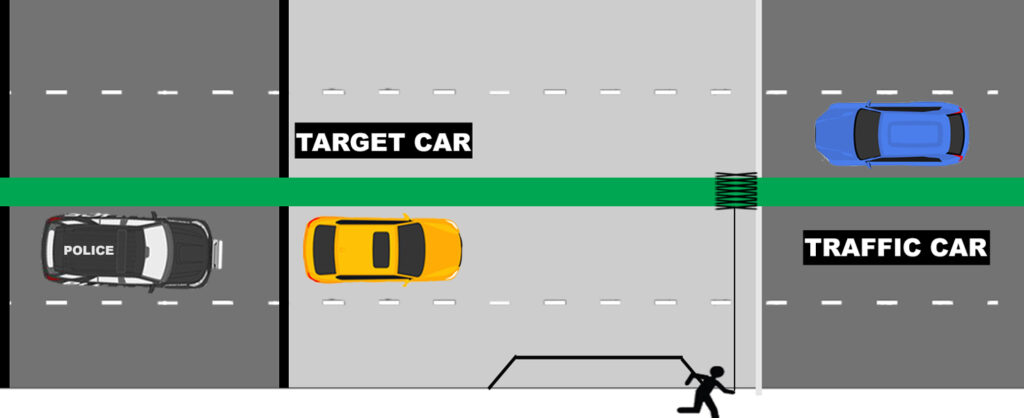
57 A. What are the benefits of pre-deployment?
A. Officer is off the roadway and pulls system into place.
B. Effectiveness: Pulled system targets distant lanes better.
C. Officer is behind cover.
D. No benefits just toss the system in traffic.
57 B. What specific exercise teaches officers how to deploy tire deflation system in dark conditions?
A. Distance measurement by counting steps to estimate approximate location of spikes.
B. This might include scenarios where officers deploy the TDD under simulated nighttime conditions, using flashlights or other low-light sources, and practice pre-planned escape routes.
C. Officers practice navigating the area and deploying the TDD in a safe manner.
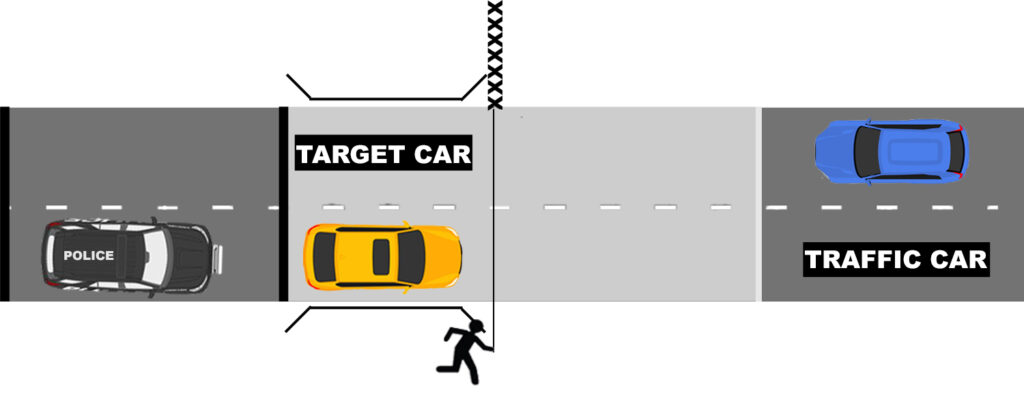
57 C. What is the main advantage of the officer being positioned away from the road and under cover when using the pre-deployment method?
A. Safety.
B. A concealed position allows officers to observe the situation more effectively without being easily seen or targeted, providing them with a better understanding of the unfolding events.
C. Pre-deployment with a focus on safety and cover enables officers to make more informed decisions about how to engage with the subject, de-escalate the situation, or deploy force if necessary.
D. The distance and cover can also influence the subject’s perception, potentially leading them to reconsider their actions and making them less likely to escalate the situation.
E. No advantage.
57 D. What does it mean to «adjust the spike system» and why is it difficult to do so day and night?
A. The system is difficult to see at night and properly position in roadway by the officer.
B. Changing a spike involves fine-tuning the movements, timing, which takes time and consistent practice.
C. Is not difficult at all and require no skill.
57 E. Why is Auto-spike safer and more effective than other methods?
A. Auto-spike is camo and hard to see the driver is less likely to evade the system.
B. Auto-spike slides into roadway making it difficult to see.
C. Auto-spike is very short and hard to see on the roadway.
D. The systems cancealability is not an important factor in safety.
57 F. What makes the Auto-spike system special?
A. Accordion frame spaps open and locks at maximun width.
B. Helps eliminate extra adjustments after deployment.
C. When recovered folds up out of the way of traffic.
D. Provides no special benefits.